
For 6–11 year olds · iPhone
Times tables and mental maths, 5 minutes a day.
Kalko is a paid-once maths game with nothing in the way: no ads, no subscription, no account, no data collected. Your child types the answer, earns stars and keeps a daily streak alive.
- ×Times tables 1 to 12, learn then practise
- +Addition, subtraction and division levels
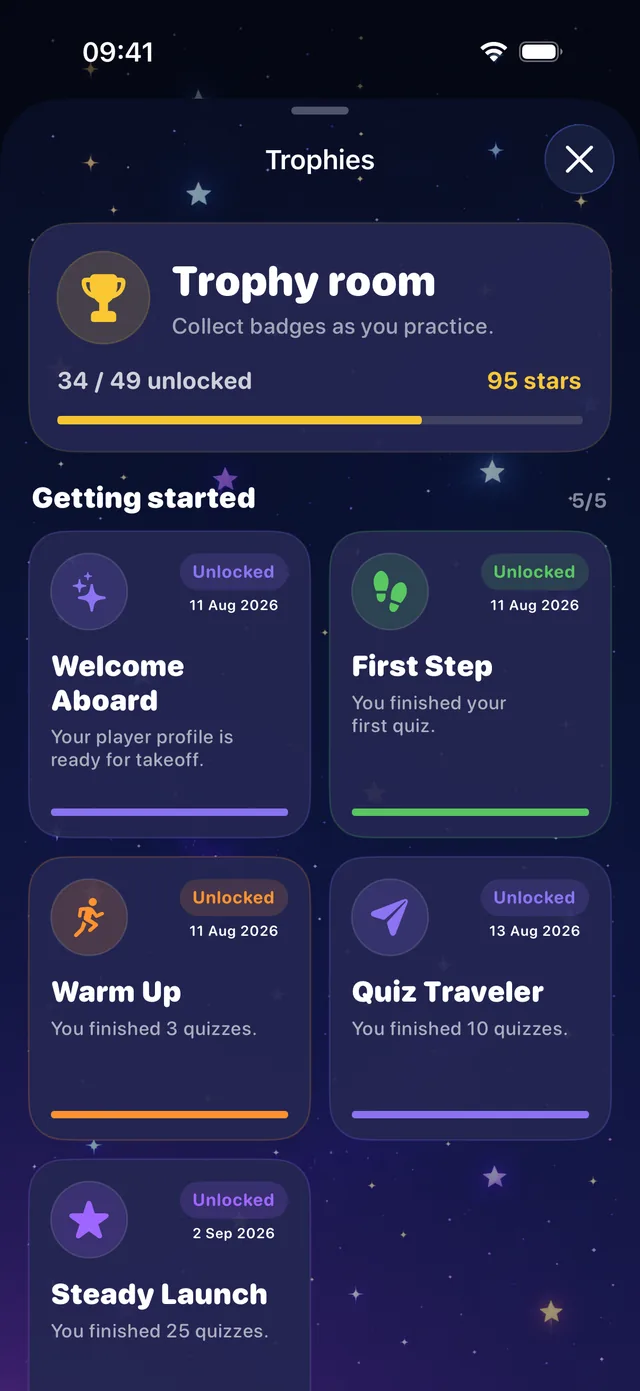
- ★49 trophies and a daily streak
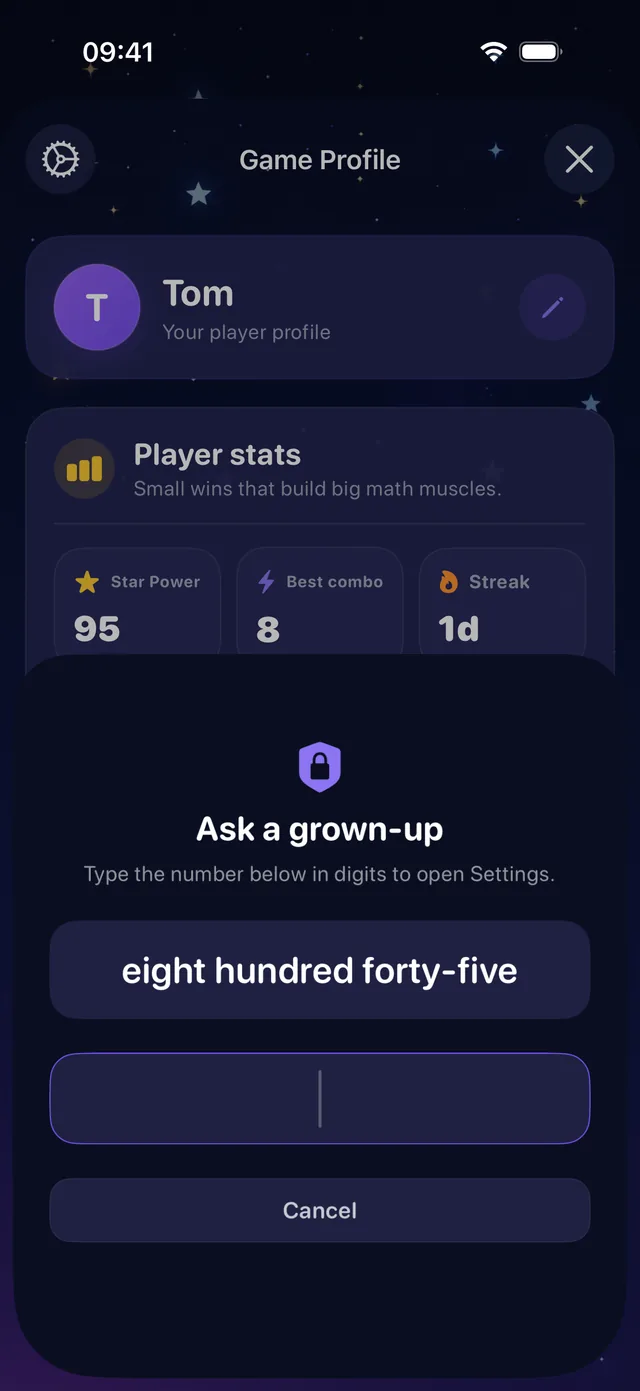
- 🔒Settings behind a parental gate
What your child sees
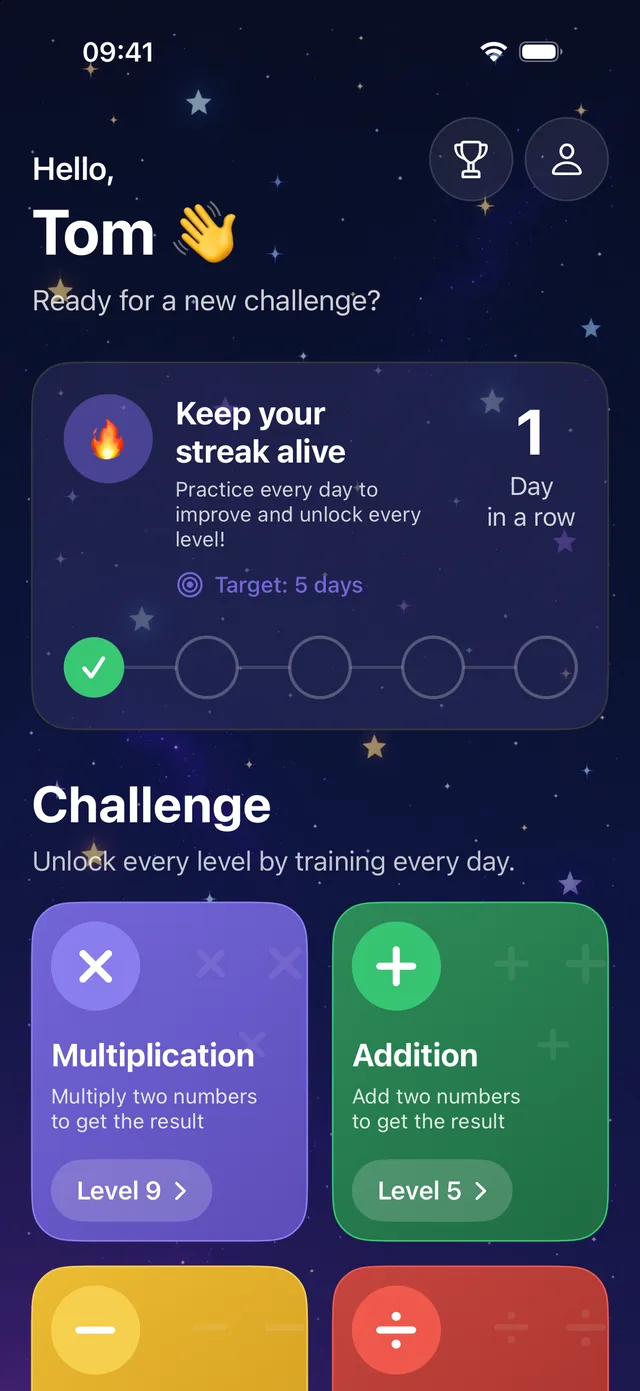
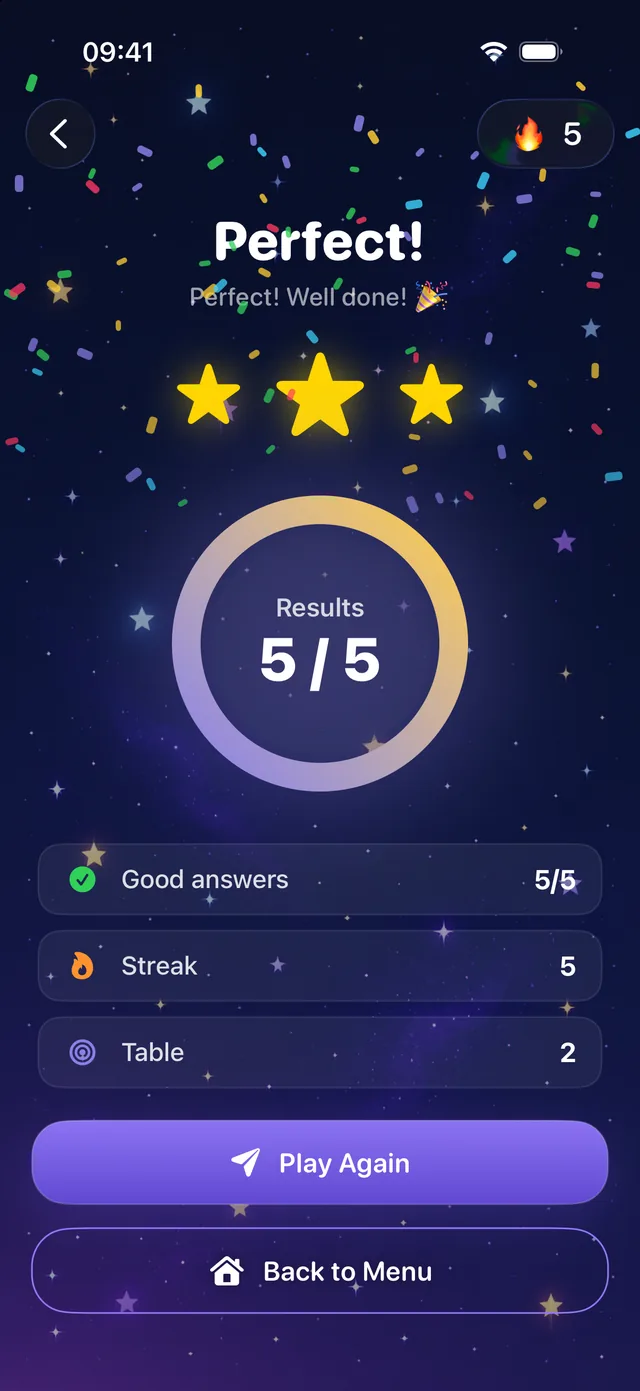
One space universe, four colour-coded operations, and short rounds that end before attention runs out.
How it works
Three ways to play, in the order a child actually learns: see the facts, practise them, then prove them under a little pressure.
-
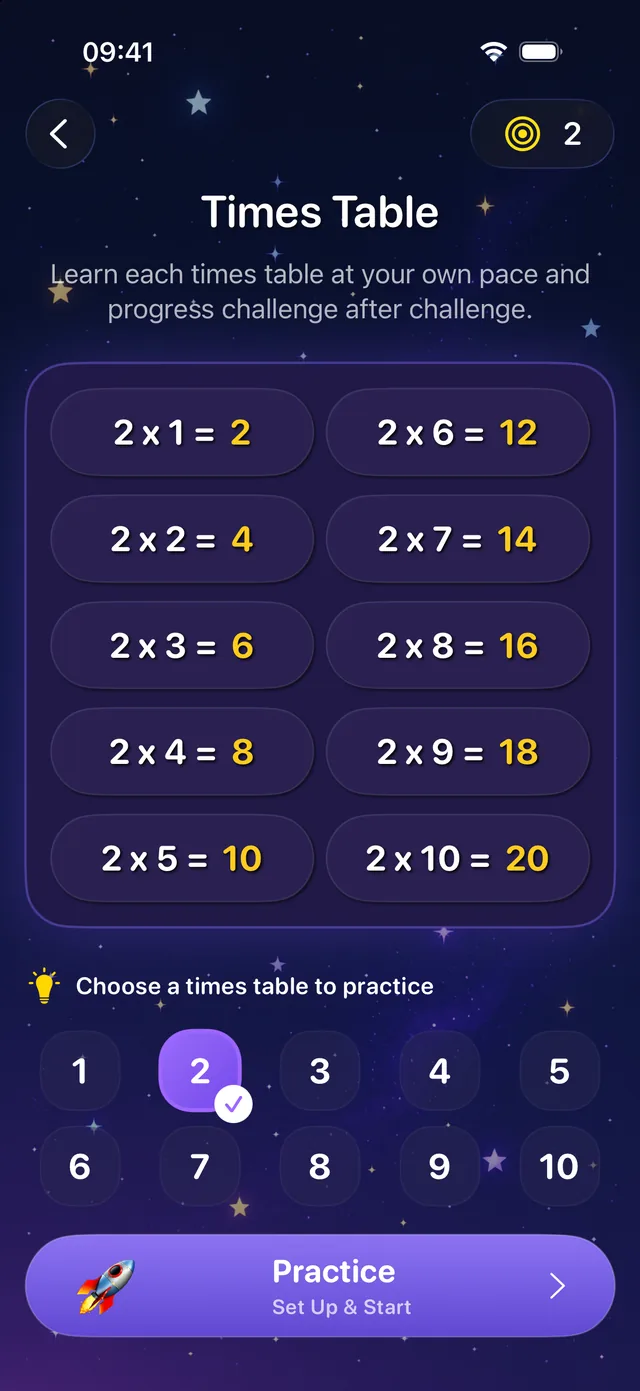
Learn: read the whole table
Pick a table from 1 to 12. Kalko shows every fact on one screen before asking anything, so the first quiz is never a surprise.
- Tables 1–10 by default, 1–12 from Settings
- 5, 10 or more questions per round
- Easy, medium or hard
-
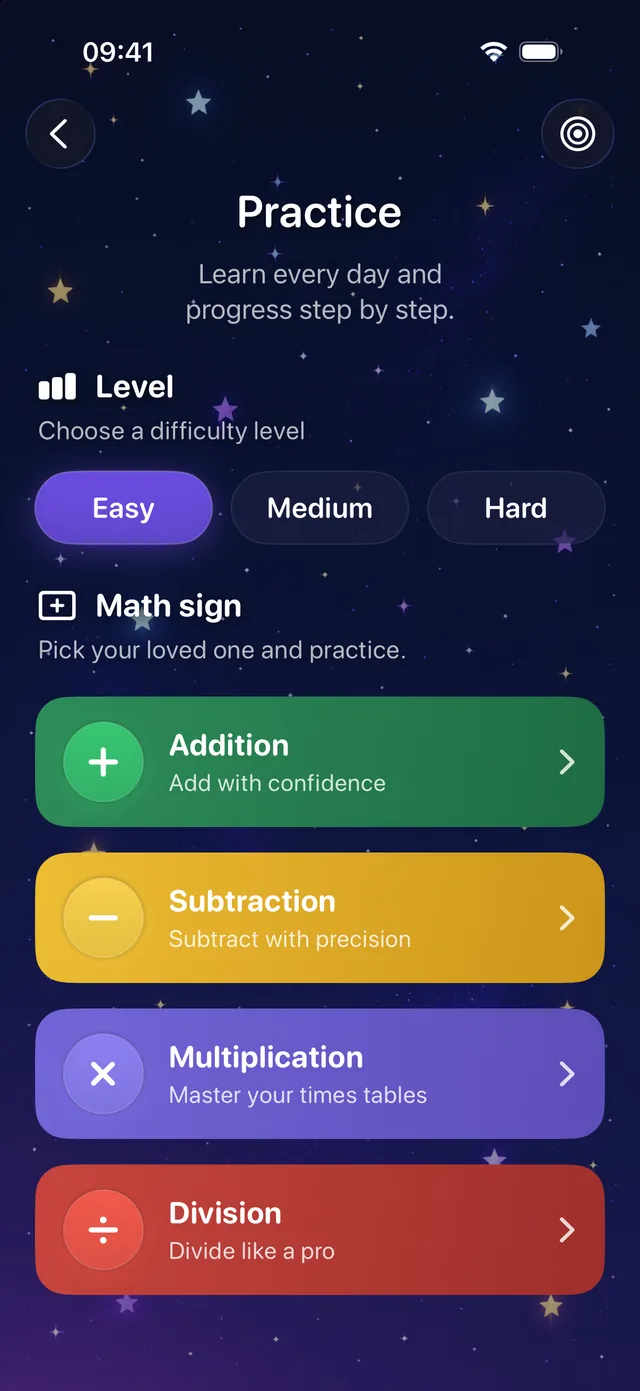
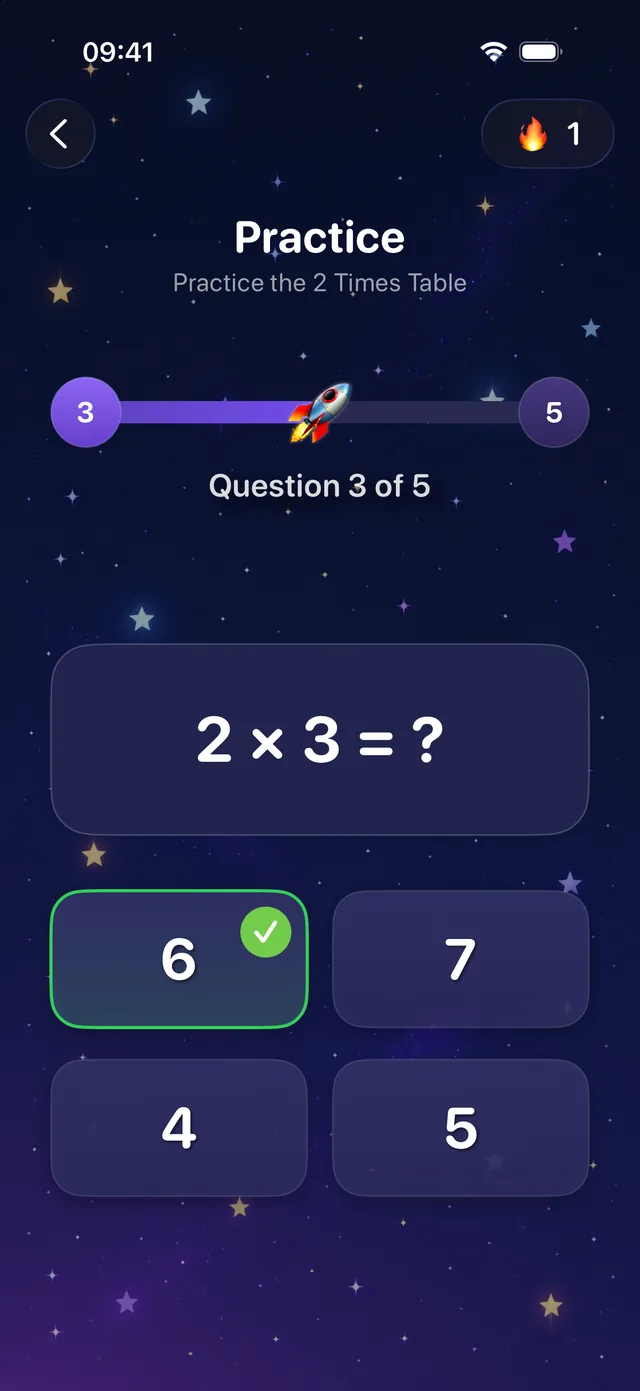
Practice: choose an operation and a level
Addition, subtraction, multiplication or division, at easy, medium or hard. Rounds are five questions long, so a session fits between dinner and bath time.
- Four-choice answers with instant feedback
- A combo counter rewards answering in a row
- Haptic feedback can be switched off
-
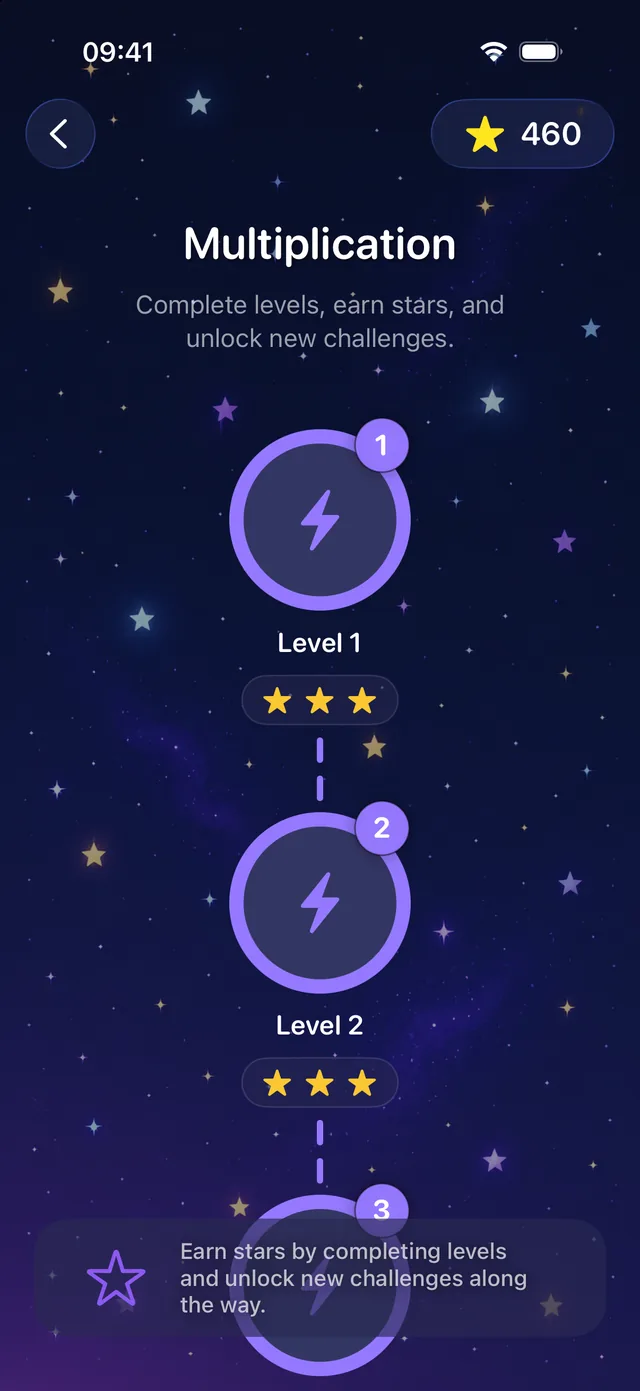
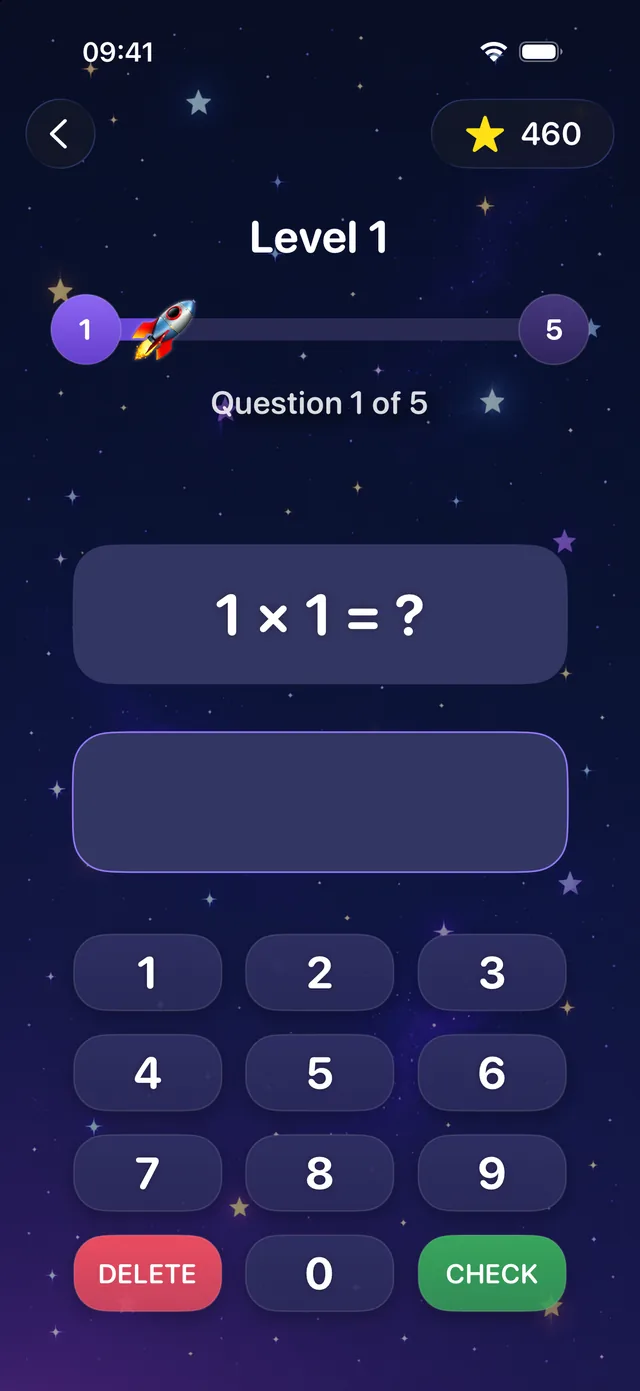
Challenge: climb the levels, type the answers
Each operation has its own ladder of levels. Answers are typed on a number pad, not picked from a list, which is the difference between recognising a fact and knowing it.
- Three stars per level, next level unlocks on completion
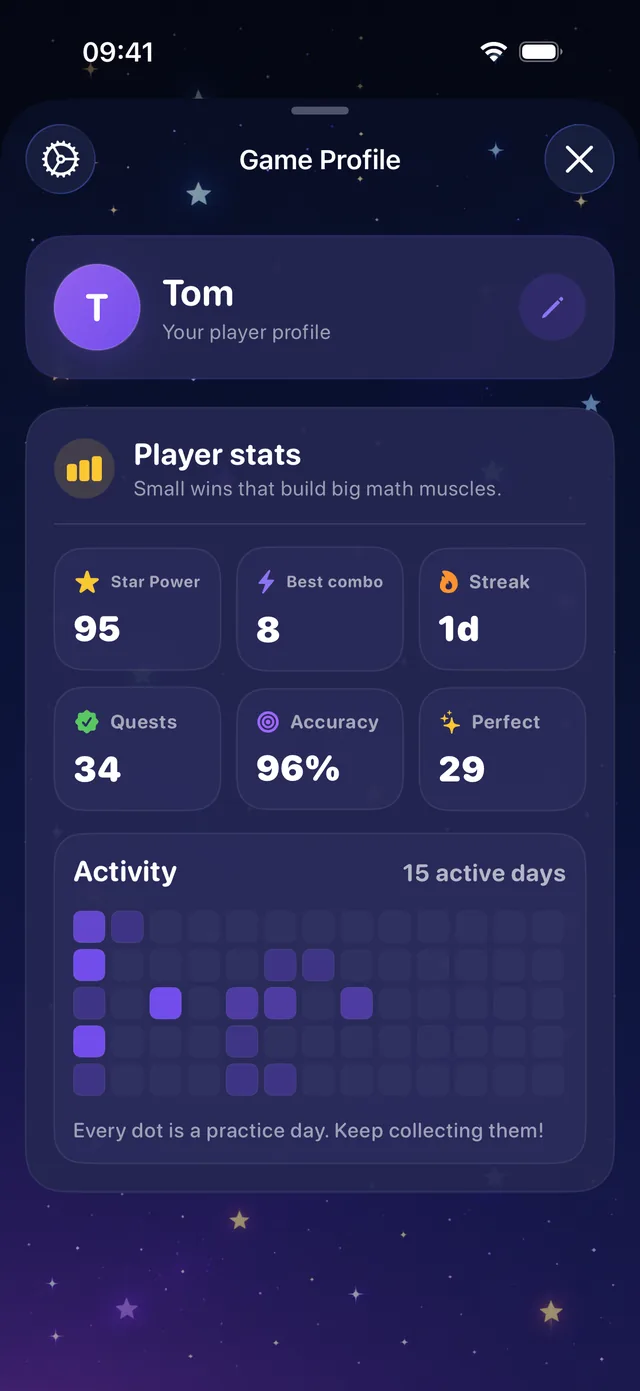
- Stars and trophies add up in the profile
- A daily streak keeps the habit going
Built for parents who read the fine print
Most "free" maths apps pay for themselves with ads, subscriptions or your child's data. Kalko costs 2.99 € once, and that is the whole business model.
- Nothing collected
- Progress lives on the device. There is no account, no email, no analytics SDK, nothing sent anywhere.
- A real parental gate
- Settings, the website and the rating link open only after typing a number that is shown in words — "eight hundred forty-five" — which a young child cannot yet read.
- A profile you can actually use
- Accuracy, best combo, perfect rounds and a calendar of practice days tell you in ten seconds whether the habit is holding.
- Family Sharing
- Buy once, install for every child in the family.
Guides for parents and teachers
Short, practical answers to the questions families ask when times tables become homework — and how to do each one in Kalko.
- × How to learn times tables fastThe four-step method that turns a table into instant recall in about two weeks.
- × Multiplication Tables Check practice (Year 4)What the June check looks like, which tables it favours, and a 4-week home plan.
- × Times tables 1 to 12: which order, and why 12Why UK and US schools go to 12, a sensible order to learn them, and the patterns in each table.
- × The 7 times table: tricks that actually workWhy 7 is the hardest table and three ways through it — plus the 8 and 12 tables while you are there.
- + Mental maths practice for kids, by ageWhat "mental maths" means at 6, 8 and 10, and how to make practice a habit instead of a fight.
- − Addition and subtraction practice for 6–7 year oldsNumber bonds, counting on, and the moment subtraction stops being scary.
- ÷ Division facts: the tables backwardsWhy division is easy once the tables are known — and why it feels hard when they are not.
- ★ Five minutes of maths a day: the routine that survives real lifeWhy little-and-often works, when to do it, and how a streak does the nagging for you.
- 🔒 Why a maths app for kids should have no ads — and no dataHow free apps pay for themselves, what to look for on the App Store privacy label, and what Kalko does instead.
- 🔒 What a parental gate is, and why ours asks for "eight hundred forty-five"How the Ask-a-grown-up screen keeps Settings, links and the reset button out of small hands.
Questions parents ask
If yours is not here, write to us — the support address is in the footer.
Does Kalko really have no ads and no in-app purchases?
Yes. It is a one-time purchase of 2.99 € on the App Store. There are no ads, no subscription, no coins to buy and no locked content. Everything in the app is included.
Learn more: why a maths app without ads mattersWhat age is Kalko for?
It is designed for 6 to 11 year olds — roughly Year 1 to Year 6 in the UK, 1st to 5th grade in the US, CP to CM2 in France. Younger children start with addition on easy; older ones use the typed challenge levels as a speed drill.
Learn more: mental maths by ageDoes it cover times tables up to 12?
Yes. Tables 1 to 10 are on by default; a parent switches the learning range to 1 to 12 in Settings. Each table can be learned in full before it is practised.
Learn more: times tables 1 to 12Can it help my child prepare for the Year 4 Multiplication Tables Check?
It is a strong daily trainer for it. The typed challenge levels build the instant recall the check measures, and the 6, 7, 8, 9 and 12 tables can be practised on their own. It is not a replica of the official on-screen test.
Learn more: MTC practice planHow does the parental gate work?
Settings, the website link and the rate-us link sit behind an "Ask a grown-up" screen. It shows a number written in words and asks for it in digits. A child who can already read "eight hundred forty-five" is old enough to be in there anyway.
Learn more: the parental gateWhat data does the app collect?
None. There is no account, no login and no analytics. Progress, trophies and the player name stay on the device. The App Store privacy label reads "Data Not Collected".
Learn more: privacy in KalkoAre the answers typed or multiple choice?
Both, on purpose. Learn and Practice use four-choice answers with instant feedback, which is gentle for a first pass. Challenge levels use a number pad, so the answer has to be recalled, not recognised.
Learn more: why typed answers build recallHow long is a session?
A round is 5 questions — under a minute for a confident child. The daily streak only asks for one round a day, which is the point: little and often beats one long Sunday session.
Learn more: the 5-minutes-a-day routineDoes it do addition, subtraction and division too?
Yes. All four operations have Practice rounds at three difficulty levels and their own ladder of Challenge levels. Multiplication additionally has the Learn mode with full tables.
Learn more: division facts practiceCan two children share one iPhone?
In version 1.0 there is one player profile per device; a second child can use the app on their own device through Family Sharing at no extra cost. Multiple profiles on one device are on the roadmap.
Learn more: practice for younger childrenDoes it work offline?
Completely. Nothing in the app needs a connection — no content is downloaded and nothing is uploaded.
How much does it cost?
2.99 € (or the local equivalent) once, on the App Store, with Family Sharing included. No subscription, ever.